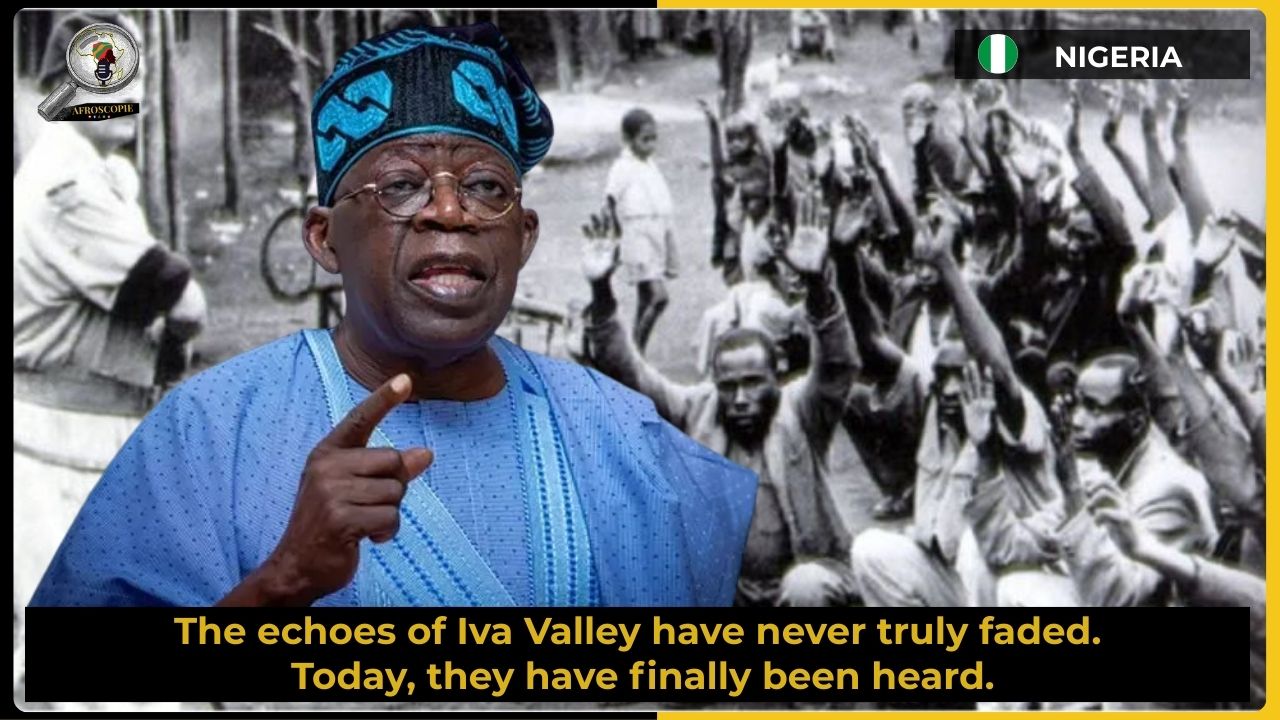
In a historic decision with far-reaching implications, Nigeria’s High Court has ordered the United Kingdom to pay £420 million in compensation to the families of 21 coal miners killed during the 1949 Iva Valley massacre, one of the darkest episodes of British colonial rule in Nigeria.
The ruling declares the shootings unlawful and a grave violation of human rights, rejecting arguments that the passage of time could erase responsibility for colonial-era crimes. The court awarded £20 million per family, plus accrued interest, and formally demanded official apologies from the British government.
More than seven decades after the tragedy—and decades after Nigeria’s independence—the judgment marks a major step forward in the global struggle for justice, historical accountability, and colonial reparations.
Remembering the Iva Valley Massacre
On November 18, 1949, British colonial police opened fire on striking coal miners in Iva Valley, near Enugu, who were protesting against poor working conditions and unfair labor practices. At least 21 miners were killed on the spot, while dozens of others were injured.
The massacre sent shockwaves across Nigeria and became a defining moment in the country’s anti-colonial consciousness, accelerating nationalist movements and resistance against British rule. Yet for decades, justice remained elusive, buried under colonial silence and post-independence political transitions.
“Crimes Do Not Expire With Time”
In its ruling, the High Court delivered a clear message: historic injustices cannot be shielded by time or political convenience.
Judges emphasized that the killings constituted unlawful use of force against civilians and violated fundamental human rights principles—standards that apply regardless of the era in which the crimes were committed. The court rejected Britain’s defense that colonial actions were beyond modern legal scrutiny.
“This court affirms that justice delayed does not mean justice denied,” one judge stated, underscoring the moral and legal responsibility of former colonial powers.
A Turning Point for Colonial Reparations
The decision is being widely viewed as a precedent-setting moment in the global debate over colonial reparations. It strengthens legal arguments that former colonial powers can be held accountable for atrocities committed under imperial rule, even many decades later.
For Africa and its diaspora, the ruling resonates far beyond Nigeria. It speaks to unresolved histories across the continent—where forced labor, massacres, land dispossession, and systemic violence were often left unacknowledged.
This judgment signals that courts may increasingly become arenas where colonial memory meets legal accountability.
Britain Faces a Moral Reckoning
Beyond the financial compensation, the court’s demand for formal apologies carries symbolic weight. It challenges Britain to confront its colonial past not as distant history, but as lived trauma with lasting consequences.
For many observers, the ruling raises broader questions: How many other colonial crimes remain unaddressed? And how should former empires engage with demands for truth, justice, and repair?
Justice, at Last
At Afroscopie, we see this ruling as more than a legal victory. It is an act of remembrance. A restoration of dignity to victims whose lives were dismissed under colonial authority. And a reminder that history, when confronted honestly, can still bend toward justice.
The echoes of Iva Valley have never truly faded.
Today, they have finally been heard.
By Giscard Ndjogou
Afroscopie News – Justice & History Desk
Tags (SEO):
Iva Valley massacre, Nigeria colonial history, UK reparations, Colonial justice, Human rights violations, Afroscopie News, British colonialism, Nigeria High Court, Reparations Africa, Historical accountability