Ghana is preparing to close an important chapter in its recent economic history.
In May 2026, the country is expected to exit the Extended Credit Facility (ECF) of the International Monetary Fund (IMF), a program agreed in 2023 to restore macroeconomic stability and place public finances back on a more sustainable path.
The move marks a critical milestone for an economy that, just a few years ago, faced severe fiscal stress, rising debt levels, and currency pressures that threatened growth and social stability.
From Crisis Management to Economic Recalibration
The IMF-backed program was designed to stabilize Ghana’s economy through a combination of fiscal consolidation, debt restructuring, monetary tightening, and structural reforms. Its primary objectives included curbing inflation, strengthening revenue mobilization, restoring investor confidence, and rebuilding foreign exchange reserves.
Since entering the program, Ghana has made measurable progress on several fronts. Inflation has moderated, fiscal discipline has improved, and negotiations with creditors have advanced—helping to reduce immediate financing risks.
Exiting the ECF signals that Ghana believes it has regained sufficient policy space to manage its economy without emergency external support.
A Test of Economic Sovereignty
Leaving the IMF program is both an opportunity and a responsibility.
On the one hand, it reflects renewed confidence in domestic economic management and offers greater flexibility in policymaking. On the other, it places the burden of discipline squarely on national institutions. Maintaining reform momentum beyond IMF oversight will be crucial to avoid backsliding.
Economists warn that the post-IMF phase is often the most delicate. Sustainable growth will depend on continued fiscal prudence, effective debt management, and targeted investments in productive sectors such as agriculture, energy, manufacturing, and digital services.
Implications for Investors and the Region
Ghana’s planned exit will be closely watched by investors and regional peers alike. As one of West Africa’s key economies, Ghana often serves as a bellwether for economic governance and reform credibility.
A successful transition could strengthen investor confidence, lower borrowing costs, and reinforce Ghana’s image as a reform-oriented economy. Conversely, any signs of policy reversal could quickly reignite market concerns.
Beyond the IMF: Building Long-Term Resilience
At Afroscopie, we see Ghana’s exit from the ECF not as an endpoint, but as a transition—from stabilization to transformation.
The challenge ahead is to convert short-term macroeconomic gains into long-term development outcomes: job creation, industrial diversification, social protection, and inclusive growth. This will require leveraging regional integration through the African Continental Free Trade Area (AfCFTA), strengthening domestic value chains, and improving governance and transparency.
As Ghana prepares to step out of IMF support, the question is no longer whether the country can stabilize its economy—but whether it can sustain reform, deepen resilience, and chart an independent path toward shared prosperity.
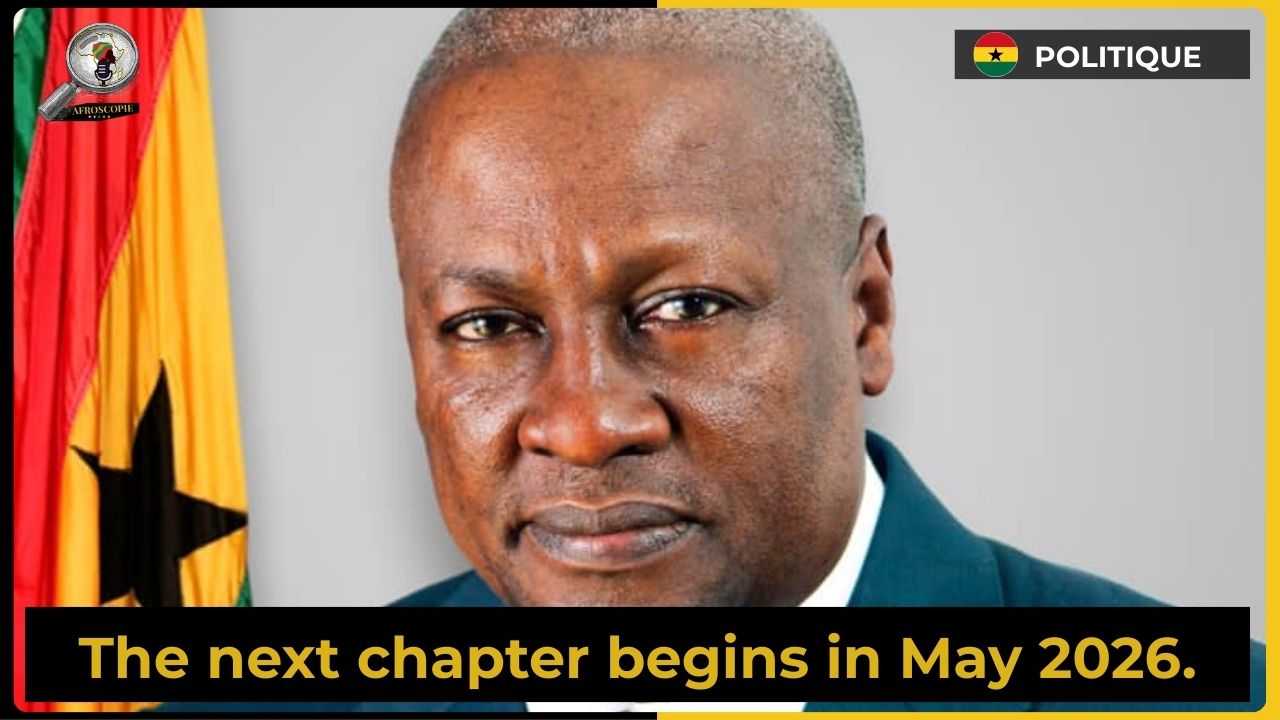
The next chapter begins in May 2026.
By Giscard Ndjogou
Afroscopie News – Economy & Public Policy
Tags (SEO):
Ghana IMF exit, Extended Credit Facility, Ghana economy 2026, IMF Africa, Economic reforms Ghana, Afroscopie News, West Africa economy, Public finance reform, AfCFTA, Macroeconomic stability