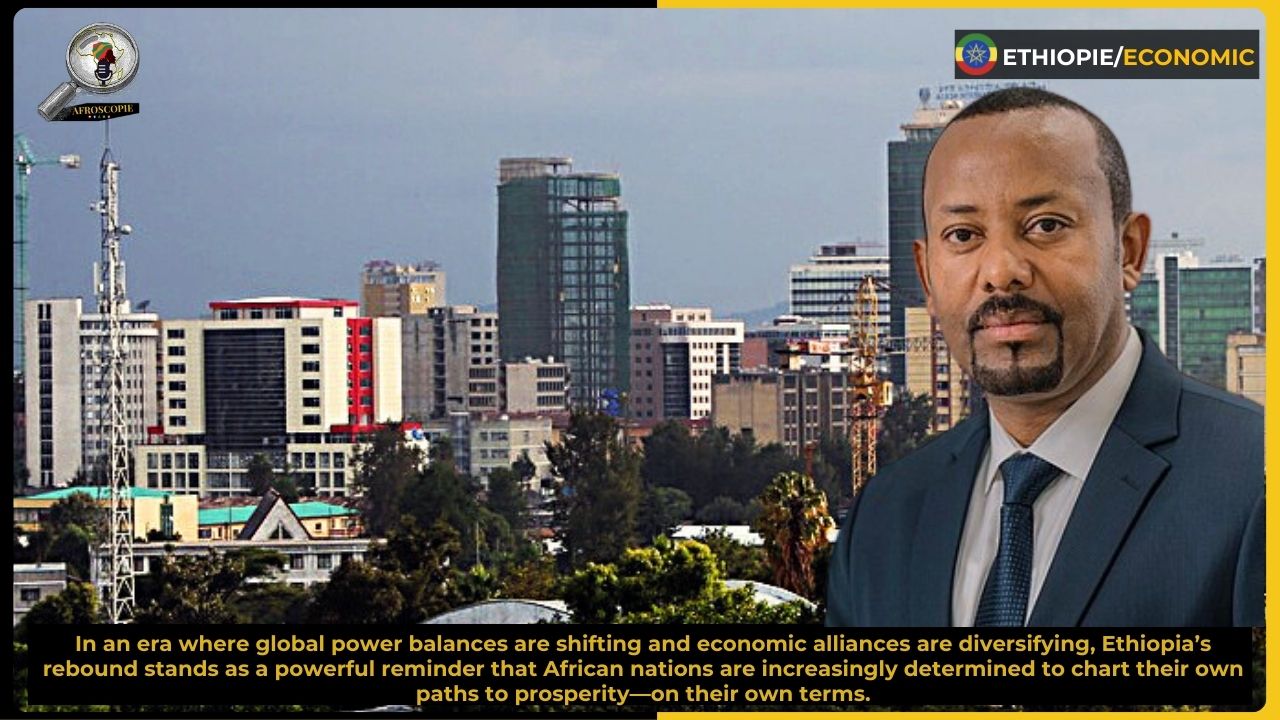
Ethiopia is forecasting a striking 10.2% economic growth rate for the current fiscal year, Prime Minister Abiy Ahmed has announced—marking one of the most remarkable rebounds on the continent.
The projection, reported by Foreign Policy on February 18, 2026, comes as the country continues to recover from a devastating civil war in the Tigray region, a conflict estimated to have cost the economy more than $28 billion. Yet against expectations, Ethiopia appears to be emerging not weakened—but recalibrated.
Reforms That Reshaped the Economic Landscape
Since July 2024, Addis Ababa has implemented sweeping reforms aimed at stabilizing and modernizing its economy.
The government allowed the Ethiopian birr to float, a bold move intended to restore currency credibility and attract foreign investment. It also opened key sectors—such as banking and telecommunications—to foreign competition, signaling a willingness to recalibrate long-standing state-centered economic structures.
Though painful in the short term, these reforms are already yielding measurable results.
Coffee export revenues surged by 82%, reaching $2.6 billion, reinforcing Ethiopia’s position as one of the world’s leading coffee producers. Gold exports also soared, now accounting for 42% of total export revenues, providing critical foreign currency inflows.
Diversification Beyond Western Frameworks
Notably, Ethiopia’s recovery unfolds despite its suspension from AGOA (the African Growth and Opportunity Act), the U.S. trade agreement granting preferential market access.
Rather than falter, Ethiopia diversified its economic partnerships—strengthening ties with China and Gulf markets, and leveraging alternative trade channels to sustain growth momentum.
This pivot reflects a broader continental trend: African economies increasingly balancing relationships across multiple global blocs, rather than depending on a single Western-centered trade architecture.
Debt, Geopolitics, and Strategic Autonomy
Ethiopia’s rebound also occurs within a complex geopolitical landscape. The country continues navigating delicate debt restructuring negotiations while managing tensions with Egypt over Nile water governance.
Yet the 10.2% growth forecast suggests that Addis Ababa is determined to assert economic sovereignty—even amid structural challenges.
At Afroscopie, we see Ethiopia’s trajectory as emblematic of a deeper shift in Africa’s development narrative: moving from aid-dependent frameworks toward reform-driven, strategy-led growth models anchored in national agency.
From Recovery to Reinvention
Sustaining double-digit growth will require continued macroeconomic discipline, investment in manufacturing and agriculture value chains, and long-term political stability.
But the message from Addis Ababa is clear:
Ethiopia is not merely recovering.
It is redefining its economic posture.
In an era where global power balances are shifting and economic alliances are diversifying, Ethiopia’s rebound stands as a powerful reminder that African nations are increasingly determined to chart their own paths to prosperity—on their own terms.
By Giscard Ndjogou
Afroscopie News – Economy & Geopolitics Desk
Tags (SEO):
Ethiopia 10.2% growth, Abiy Ahmed reforms, Ethiopian economy recovery, AGOA suspension Ethiopia, Africa economic sovereignty, Coffee exports Ethiopia, Gold exports Ethiopia, Afroscopie News, African development model, Ethiopia debt restructuring